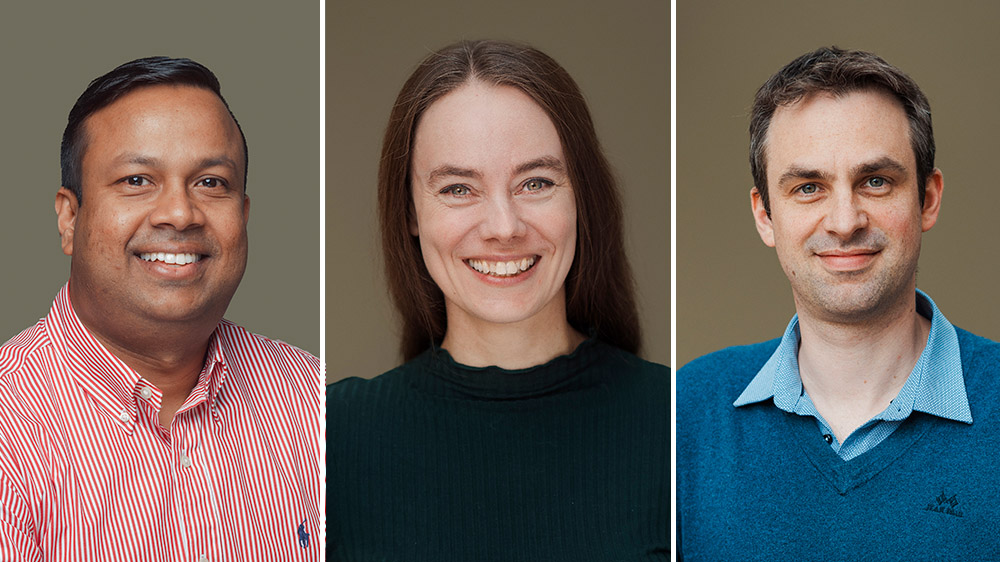
Dr. Ian G. Mills - Biography
|
Group: E-mail: Tel: |
Prostate Cancer |
Ian G. Mills received his undergraduate degree in Biochemistry in 1996 from the University of Oxford. He went on to study molecular aspects of homotypic early endosome fusion with Dr. Michael Clague at the University of Liverpool, as part of the Welcome Trust PhD Programme in Molecular and Cellular Physiology. In the course of his PhD, he defined early endosomal autoantigen 1 (EEA1) as a membrane tether in endosome fusion (1).
Having received his PhD in 2000, he then secured an MRC Postdoctoral Training Fellowship and joined Dr. Harvey McMahon’s group the MRC Laboratory of Molecular Biology in Cambridge. He focused on structural and functional studies on proteins implicated in clathrin-mediated membrane trafficking, in particular the epsin adaptor proteins, amphiphysin and dynamin. He contributed to defining helical insertion as an induction mechanism for membrane curvature by epsin 1 (2) and the role of amphiphysin in curvature sensing (3).
At the end of 2003, he joined Professor David Neal in the Department of Oncology at Cambridge University to establish a new Uro-Oncology Research Group, focusing on prostate cancer and in particular on androgen receptor signalling and the development of castrate-resistant disease. Here he became interested in better defining the transcriptional network regulated by the androgen receptor (4). This led to the discovery that the androgen receptor impacts on cancer development at least partly as a regulator of metabolic networks of genes, in keeping with many other cancer-associated transcription factors including c-Myc and HIF1 (5).
- Mills, I.G., Jones, A.T. & Clague, M.J. Involvement of the endosomal autoantigen EEA1 in homotypic fusion of early endosomes. Curr Biol 8, 881-884 (1998).
- Ford, M.G., et al. Curvature of clathrin-coated pits driven by epsin. Nature 419, 361-366 (2002).
- Peter, B.J., et al. BAR domains as sensors of membrane curvature: the amphiphysin BAR structure. Science (New York, N.Y 303, 495-499 (2004).
- Massie, C.E., et al. New androgen receptor genomic targets show an interaction with the ETS1 transcription factor. EMBO reports 8, 871-878 (2007).
- Massie, C. E., et al., The androgen receptor fuels prostate cancer by regulating central metabolism and biosynthesis. The EMBO Journal 30(13):2719-33 (2011)
- Freedman, M., et al., Principles for the post-GWAS functional characterisation of cancer risk loci. Nature Genetics 43(6):513-8 (2011)
Publications
Full list of Dr. Mills's publications.
- Back to Prostate Cancer Group -


Log in to comment
Not UiO or Feide account?
Create a WebID account to comment